Amalfi
Once the capital of the maritime republic known as the Duchy of Amalfi in the 9th to 12 Centuries. In 839 AS Amalfi declared independence from the Duchy of Naples.
In the 12th Century the town was taken by King Roger II of Sicily in 1131 and later sacked by the Pisans in the following years. A tsunami in 1343 destroyed the port and lower town,[18] and Amalfi never recovered to anything more than local importance.
The town was discovered by the British upper class spending their winters in Amalfi. Today the town is an UNESCO World Heritage Site.>
We have travelled to Amalfi many times and enjoyed the scenic coast.
Select image for a larger view.
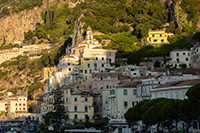
1. Amalfi climbs up the hillsides.
2. The beach in Amalfi.
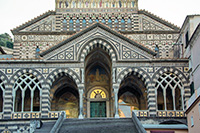
3. Duomo di Amalfi, the Cattedrale di Sant'Andrea dates back to Medieval time, and the size and architecture reflects the previous commanding position the town held. Its initial construction dates to the 9th and 10th Centuries, with changes made over the centuries. What we see today is the 19th Century Norman-Arab-Byzantine facade.
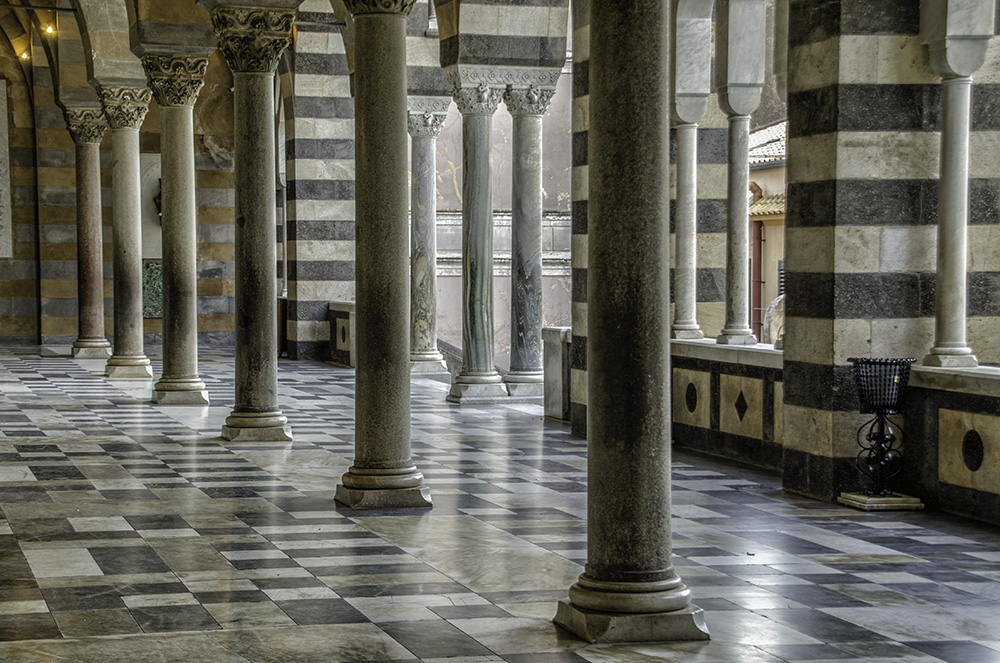
4.Sixty-two steps lead to the doors of the Duomo. The portico at the entrance is impressive.
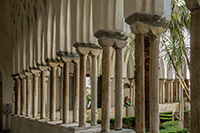
5. The Cloister - Cloister of Paradise - was built in the 13th century to create the cemetery of the Amalfi nobility. (Burials lasted only until the 1500s because of the hygienic conditions that arose.)
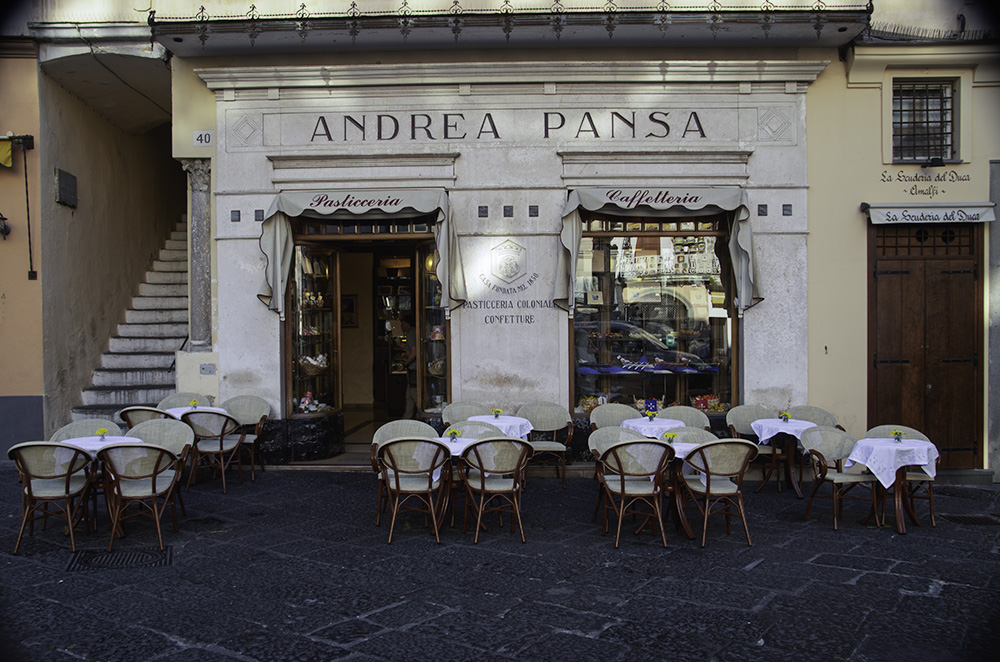
6. Andrea Pansa, this is the life. Walk down to the town, enjoy a drink, and a pastry while watching the life on the Piazza go by.
6.Amalfi is not only tourists, local cyclist stops by the fountain for a break.
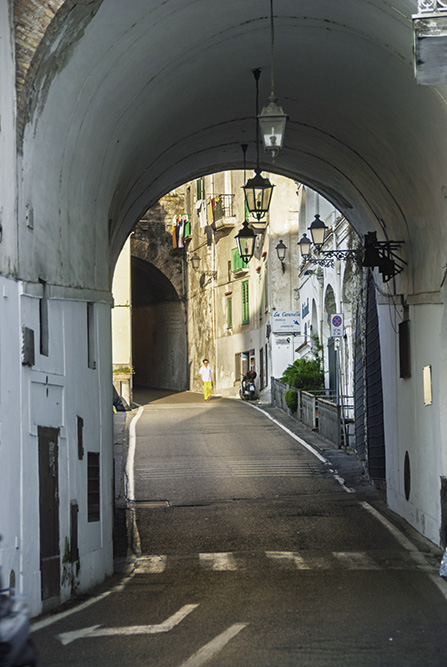
7.Walk the main street to the back town area.